Welcome to our Water Treatment Company!
We'are Open: Mon - Sat 10:00 AM - 06:00 PM

- Call Us for help!
- +91-9911981992
- Mail Us
- sales@innovacorporate.com
Manufacturers, Exporters and Suppliers of Hot Water Corrosion Inhibitors – Protection for Closed Loop & Industrial Heating Systems in Bangalore
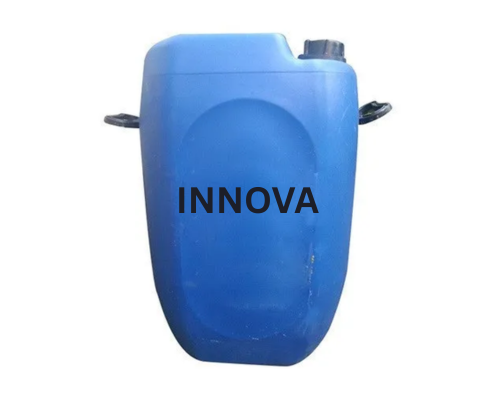
Hot Water Corrosion Inhibitors in Bangalore
Innova Corporate (India) offers Hot Water Corrosion Inhibitors for closed-loop hot water heating systems, solar water heaters, and process hot water circuits in Bangalore's pharmaceutical plants (hot water for CIP), hotels, hospitals, and industrial facilities (aerospace, food processing). Bangalore's make-up water – Cauvery water (TDS 300-500 mg/L, chlorides 50-150 ppm) or groundwater (TDS 800-2000 mg/L, chlorides 100-250 ppm) – can cause general and pitting corrosion of mild steel and copper when heated to 60-90°C (140-194°F). Our inhibitors are based on sodium nitrite (anodic inhibitor), molybdate (pitting inhibitor), tolyltriazole (copper corrosion inhibitor), and a pH buffer (borate or bicarbonate). For pharmaceutical hot water circulation loops (for CIP - clean-in-place systems), we recommend a nitrite-borate-azole blend at 500-1000 ppm (as product). For solar water heaters (increasing in Bangalore's residential and commercial buildings), our propylene glycol-based antifreeze + inhibitor prevents corrosion and scaling (also protects against rare freezing – Bangalore's winter 10-15°C/50-59°F). For process hot water circuits in textile and food processing, we offer a higher temperature stable (up to 120°C/248°F) inhibitor containing phosphonates and azoles. The products are supplied as liquid concentrates (25-40% active) for easy dosing. We provide test kits for nitrite (colorimetric), molybdate (thiocyanate method), pH, and azole (UV) to monitor treatment levels. For existing systems with rust or scale (common in older Bangalore facilities), we offer a pre-treatment cleaner (acidic or alkaline) before inhibitor application. For food-grade hot water circuits (dairy, beverages, food plants), we supply NSF-approved inhibitors (molybdate-based, no nitrite). Available in 25L, 200L drums. Technical support includes system volume calculation, dosing recommendations, and annual maintenance checks.
Hot Water Corrosion Inhibitor can also be used in low pressure steam boilers as a single drum programme in Bangalore, where it is specially designed for waters with a high non-alkaline hardness and low silica levels. It is highly suitable for ferrous and cuprous materials found in local processing equipment. While it may be used with care in systems containing galvanized steel, it is unsuitable for systems containing aluminium.
Benefits :
- High performance scale and corrosion inhibitor
- Excellent corrosion, scale and fouling prevention for hot water and chilled water systems
- Convenient single drum formulation for low pressure steam boilers
- Excellent for high non-alkaline hardness, low alkaline hardness, low CO2 content and low silica levels
- Suitable for ferrous and cuprous materials
- Ideal for preserved locomotive boilers, steam powered models, exhibition and museum boilers