Welcome to our Water Treatment Company!
We'are Open: Mon - Sat 10:00 AM - 06:00 PM

- Call Us for help!
- +91-9911981992
- Mail Us
- sales@innovacorporate.com
Manufacturers, Exporters and Suppliers of Antiscalant INNOVA MT 065 – For High Sulphate Water in RO & Desalination Systems in Odisha
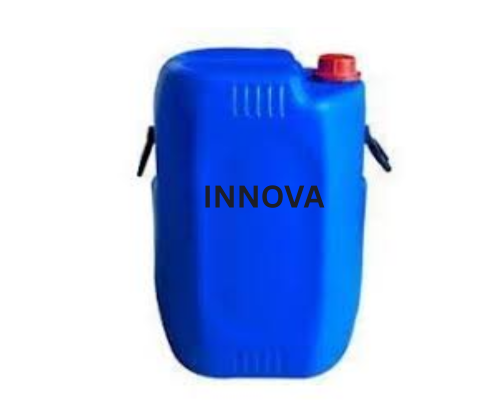
Antiscalant For High Sulphate Water (INNOVA MT 065) in Odisha
Innova Corporate (India) introduces Antiscalant for High Sulphate Water for Odisha. Sulfate levels (150-500 ppm as SO₄²⁻) come from mining effluents (coal mines in Talcher, Angul; chromite in Sukinda valley), industrial effluents (steel plants, fertilizer plants), and agricultural runoff. High sulfate leads to calcium sulfate (gypsum) scale, which is difficult to control and tenacious on RO membranes. Our product is a polymer-phosphonate blend with sulfonated copolymers preventing calcium sulfate, barium sulfate, and strontium sulfate scales through crystal modification. Effective in cooling towers, RO systems, and ZLD evaporators serving steel plants, power plants, aluminum smelters, and fertilizer plants. Liquid, easy to dose at 3-10 ppm, effective up to 95°C. By using our product, Odisha facilities achieve reduced scaling, 25-35% longer run times, lower cleaning costs, improved water recovery (85-90%), and OSPCB compliance.
Benefits in Odisha :
- Highly Effective Calcium sulphate inhibitor for local industrial water
- Effective against iron and calcium carbonate found in the region
- Compatible with all membrane types used in the capital city
- Cost-Effective treatment for all brackish and water systems in Odisha
- Liquid product, easy to handle for local plant operators
Treatment & Dosage Requirements in Odisha:
In calculating the dose rate of INNOVA MT 065 for facilities in Odisha, the membrane manufacturer's operating limits and local feed water quality should be strictly considered. All dose rate calculations should be made on the computer projection programme "e-WATER 5.0", which calculates the Ipb/Ksp ratio for calcium sulphate and other potential scaling salts specific to the Odisha water table.
For Ipb/Ksp ratios < 3 the preferred product of choice is Tacelene Chem-7065; for ratios 2.8 to 7.0, INNOVA MT 065 is normally dosed at 5.0 to 25 mg/L in the concentrate, which is equivalent to 2.5 to 6 mg/L in the feed water for Odisha based systems, dependent on the system recovery.
INNOVA MT 065 can be diluted with product water and should be applied continuously by means of a suitable metering pump. For the tea processing and rubber industries in Odisha, continuous feed is essential since calcium sulphate is difficult to remove once precipitation has occurred in local filtration units.
Principle Of Uses:
INNOVA MT 065 has been developed specially as a calcium sulphate inhibitor, for waters with CaSO4 Ipb/Ksp ratio of 2.8 to 7.0. It functions by a powerful threshold mechanism of calcium carbonate, and is highly tolerant to the presence of iron.