Welcome to our Water Treatment Company!
We'are Open: Mon - Sat 10:00 AM - 06:00 PM

- Call Us for help!
- +91-9911981992
- Mail Us
- sales@innovacorporate.com
Manufacturers, Exporters and Suppliers of INNOVA CW 302 – Advanced Closed System Treatment for Corrosion & Deposit Control in Saudi-arabia
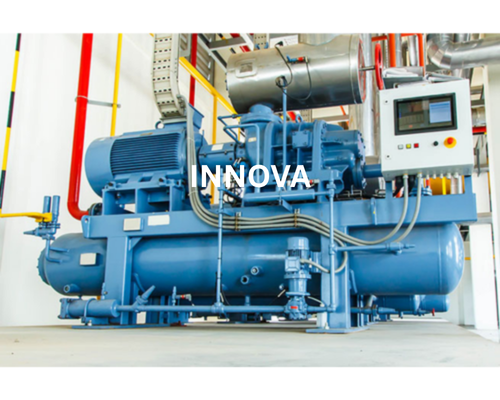
Closed System Treatment (INNOVA CW 302) in Saudi-arabia
Innova Corporate (India) provides Closed System Treatment 302, a premium molybdate-nitrite-azole based corrosion inhibitor for mixed metallurgy closed systems in Saudi Arabia. It works through molybdate (anodic passivation), nitrite (additional inhibition), and azole (copper protection). Non-toxic, chromate-free. Typical dosage: 500-1500 ppm. Key applications: chillers in commercial buildings, refinery cooling systems, desalination plant HVAC, and steel/aluminum process cooling. By using this product, Saudi facilities achieve corrosion rates below 0.5 mpy for steel, 15+ years system life, reduced maintenance downtime, and Royal Commission compliance.
A specially formulated chemical penetrant "INNOVA CW 302" will usually provide access throughout the deposit so that treatment chemicals can work their way into the affected area within Saudi-arabia-based facilities. This eliminates the need for costly shutdown of the system and the resultant loss of production. A penetrant usually is a combination of wetting agents and surfactants which attack a deposit and make it porous so that other treatment chemicals function effectively even in high-moisture regional climates.
For example, a penetrant alone, or a biocide alone may not be effective in controlling organism growths in Saudi-arabia's water systems, but the two together will solve the problem and restore the system to normal treatment. Penetrant can be used in re-circulating or once through cooling systems across the city and is compatible with most other treatment chemicals. Generally, the deposits can be classified into three groups.
Advantages:
- Provides HPA As The Main Corrosion Inhibitor
- Stable At Alkaline Ph Conditions
- Contains LMW Polymer Which Prevents Deposition Of Suspended Solids
- Single Product Treatment For Chloride And Sulphate Corrosion
- Supplemented With Scale Inhibito
Applications:
Biological Growth Control:
Some microorganisms secrete protective slime which serves as a distinct barrier against biocide treatment. Under such circumstances increasing the biocide dosage is a futile effort because access to the living organisms is still unobtainable. The organisms continue to grow under the protective slime.Furthermore, this slime barrier accumulates slit and other inorganic deposits which further increase the depth of the protective barrier - making control even more difficult. "INNOVA CW 302" is an effective penetrant which provides access through this barrier so that biocides will do their job and control the sheltered biological growths. "INNOVA CW 302" is slug fed into the system about ½ hour before beginning the biocide treatment.
Inorganic Deposit Control:
Scale, corrosion products, slit can accumulate rapidly and form an impenetrable barrier against treatment chemicals designed to control these conditions. In addition, the barrier can compound the treatment problems by harboring colonies of bacteria. The penetrant will be fed into the cooling system ahead of the prescribed anti-foulant chemical treatment.Controlling Oily Deposits:
Manufacturing plants, refineries and industries using oils in their production process are often plagued with oil in the cooling water system. When oil deposits accumulate, they form a barrier around corrosion deposits, bacteria, slit and scale. These oil barriers provide an excellent nutrient for excess bacteria growths - which in turn accumulate more silt deposits. Normal treatment cannot penetrate these oily barriers - particularly when they become baked and hardened by heat. The continuous feeding of "INNOVA CW 302" is recommended to break this barrier and permit the biocide treatment to be effectivePacking:
INNOVA CW 302 is available in 25 kgs, 50 kgs & 200 kgs.